
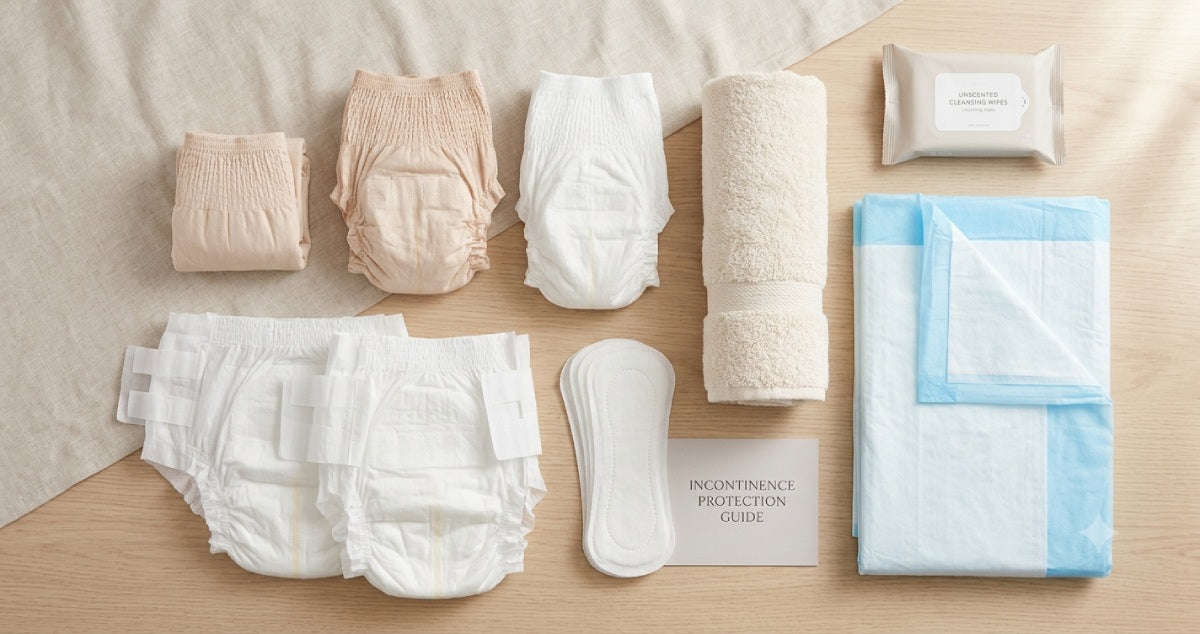
If you've been managing bladder leaks quietly on your own, you're in very good company. Many people spend months—or even years—adjusting their daily routines, carrying extra clothing, or avoiding certain activities before they realise there are products designed to make life much easier. Incontinence is more common than most people think, yet it's rarely talked about openly.
This guide isn't about medical causes or treatments—that conversation is best had with your healthcare provider. Instead, it's here to help you understand the different types of incontinence protection products available, so you can choose the option that fits your lifestyle, comfort level, and daily routine with greater confidence.
You are not alone — and there are good options
No two people experience incontinence in exactly the same way. Some only notice occasional leaks when they laugh, cough, or exercise, while others need reliable protection throughout the day or overnight. Some manage independently, while others rely on the support of a caregiver.
That's why there isn't a single product that's right for everyone. The best choice depends on the amount of leakage, your activity level, and the level of support you need. The sections below explain the main product categories—from lighter protection to more absorbent options—so you can confidently identify what works best for your situation.
Protective underwear — for moderate to heavy leakage
For many adults who want dependable protection without changing their daily routine, protective underwear is an excellent place to start. Designed to look and feel similar to regular underwear, pull-on styles offer discretion while providing reliable absorbency for moderate to heavy leakage.
Because they can be pulled on and off independently, they're a practical choice for people who remain active, work outside the home, travel, or simply want a product that feels familiar. Most protective underwear is available in multiple absorbency levels, making it easier to match the product to your individual needs rather than settling for a one-size-fits-all solution.
Browse the Protective underwear for adults collection:
https://onlinemedicalsupply.com/collections/protective-underwear-for-adults
Disposable briefs — when caregiver assistance is involved
Disposable briefs are often the preferred option when a caregiver helps with daily care. Unlike pull-on underwear, these products feature adjustable side tabs that can be fastened and unfastened without requiring the wearer to step in or out of the garment. This makes changes quicker, easier, and more comfortable for both the caregiver and the person receiving assistance.
They also typically provide higher absorbency, making them well suited for heavier leakage, overnight use, or individuals with limited mobility. The secure fit helps keep the product in place while offering dependable protection during extended wear.
Explore the Protective briefs for adults collection:
https://onlinemedicalsupply.com/collections/protective-briefs-for-adults
Liners and pads — for lighter leakage
Not everyone needs maximum absorbency. For people who experience light or occasional bladder leaks, such as those triggered by coughing, sneezing, laughing, or exercise, liners and pads can provide discreet, comfortable protection without feeling bulky.
Designed specifically for urinary incontinence, these products absorb urine quickly and help keep moisture away from the skin. They're available in a variety of absorbency levels, allowing you to choose the right balance of protection and comfort for your daily activities.
Browse the Liners & pads collection:
https://onlinemedicalsupply.com/collections/liners-pads
Disposable underpads — protecting beds and chairs
While wearable protection manages leakage, underpads help protect mattresses, chairs, wheelchairs, and other furniture from moisture. They're especially valuable during overnight care or for anyone spending extended periods in bed or seated.
Many caregivers find that using both a protective brief and a disposable underpad overnight provides an extra layer of protection. This combination helps keep bedding cleaner, makes nighttime changes easier, and reduces prolonged skin contact with moisture, which can contribute to irritation.
Browse Disposable underpads:
https://onlinemedicalsupply.com/collections/disposable-underpads
Personal wipes — an often-overlooked essential
Good skin care is an important part of incontinence management. Gentle cleansing after each product change helps remove moisture and supports healthy skin, especially for older adults or people with sensitive skin.
Personal wipes made for perineal care are softer and pH-balanced, making them a more comfortable choice than regular soap and water during frequent changes. They're also convenient for caregivers and for anyone with limited mobility who needs a quick, effective way to stay clean throughout the day.
Browse Personal wipes:
https://onlinemedicalsupply.com/collections/personal-wipes
For additional solutions, explore the complete Incontinence collection at Online Medical Supply:
https://onlinemedicalsupply.com/pages/incontinence
Frequently asked questions
How do I know which absorbency level I need?
Start by estimating the amount of leakage you experience—light, moderate, or heavy. Most product pages include absorbency information to help you choose the option that best matches your needs. If you're unsure, selecting a slightly higher absorbency often provides greater peace of mind.
Is there a difference between incontinence products and menstrual pads?
Yes. Incontinence products are specifically designed to absorb urine quickly and lock away moisture to help protect the skin. Menstrual pads are made for a different type of fluid and aren't intended to manage urinary leakage effectively.
Should I speak to a doctor before managing incontinence with products?
Yes. While incontinence products make everyday life more comfortable and manageable, they don't treat the underlying cause. A healthcare provider can determine whether your symptoms are related to a condition that can be treated or improved.
Disclaimer: This article is for general informational purposes only. Incontinence products are aids for management—not treatments for medical conditions. Urinary incontinence can have a range of underlying causes, many of which are treatable. Please speak with your healthcare provider for diagnosis and personalised treatment recommendations.