
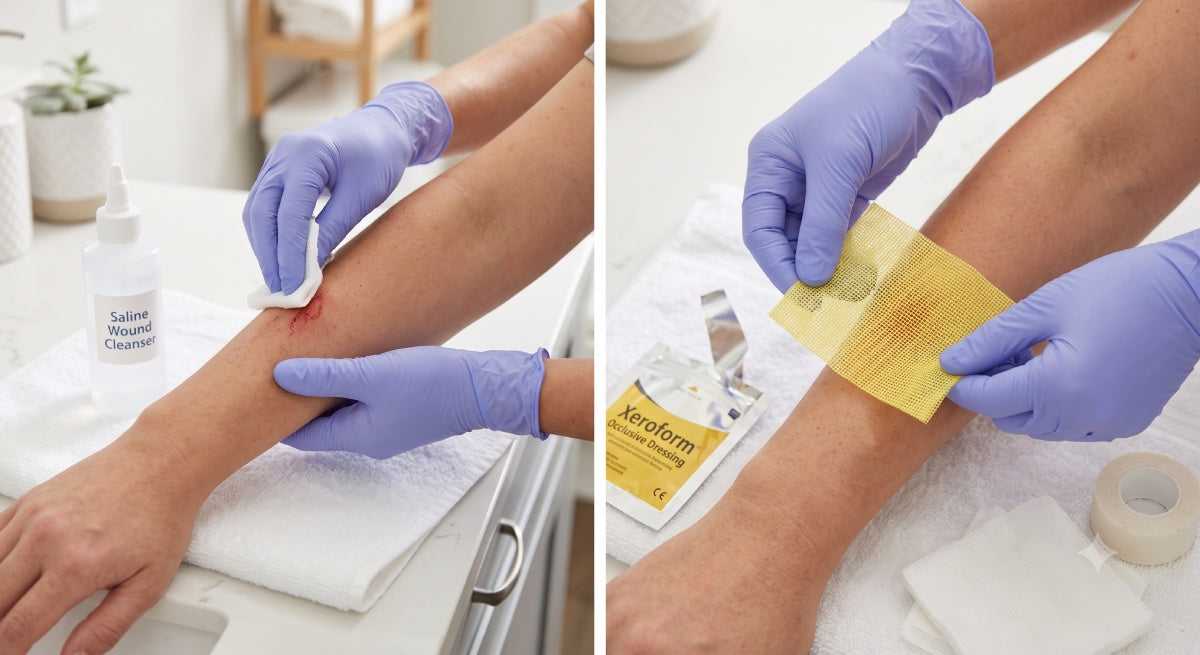
Accidents rarely come with a warning—and neither do minor wounds. A kitchen cut, a scraped knee, or a small injury while gardening can happen in seconds. In those moments, a doctor isn't always immediately available. That's why knowing the basics of first aid and proper wound care can make all the difference—not only for yourself, but also for someone who may need your help.
The good news is that most minor wounds can be treated safely at home when they're cleaned and dressed correctly. This guide explains when home care is appropriate, what supplies you'll need, and how to clean and dress a minor wound safely, step by step.
Important: This guide is for minor wounds only, including small cuts, scrapes, and shallow abrasions. If a wound is deep, continues bleeding, or shows signs of infection, seek medical attention promptly.
When is it safe to treat a wound at home?
Before treating any wound, take a moment to assess the injury. Not every wound can be safely managed at home.
Home care is generally appropriate for:
-
Small cuts and scrapes from everyday activities
-
Shallow abrasions or minor friction wounds
-
Small blisters that have not opened
Seek urgent medical care if the wound:
-
Will not stop bleeding after 10–15 minutes of firm pressure
-
Is deep, gaping, or has ragged edges that may require stitches
-
Was caused by a puncture, animal bite, or rusty object
-
Contains debris that cannot be removed with gentle rinsing
-
Occurs in someone with diabetes, poor circulation, or a weakened immune system
-
Shows signs of infection such as spreading redness, warmth, swelling, or discharge
What supplies do you need?
Keeping a basic first aid kit at home makes wound care easier. A well-stocked home first aid kit should include:
-
Nitrile or latex-free gloves to protect both the caregiver and the patient
-
Sterile gauze pads for cleaning and covering wounds
-
Xeroform gauze for appropriate wound types
-
A wound cleanser, such as a saline-based spray or formulated wound wash
-
Medical tape to secure dressings
-
Adhesive bandages for smaller cuts
Shop wound care supplies at Online Medical Supply.
What is xeroform gauze and when is it used?

Xeroform gauze is a sterile, petrolatum-based gauze impregnated with 3% bismuth tribromophenate, a mild antimicrobial and deodorising agent. Medline Curad Xeroform Gauze is a widely used option for both home and professional wound care.
Unlike ordinary dry gauze, xeroform gauze is designed to be non-adherent. In simple terms, it helps prevent the dressing from sticking to the healing wound, making dressing changes more comfortable while helping protect newly healing tissue.
It is commonly used for:
-
Shallow wounds with minimal drainage
-
Minor burns and abrasions
-
Skin donor sites
-
Minor surgical wounds
Because xeroform gauze is an occlusive dressing, it is not recommended for heavily draining or infected wounds. For wounds beyond minor everyday injuries, always follow your healthcare provider's recommendations.
Step-by-step: how to clean and dress a minor wound
Follow these simple steps to clean and dress a minor wound safely.
-
Wash your hands and put on gloves. Always wear nitrile or latex-free gloves before treating a wound to reduce the risk of contamination.
-
Control the bleeding. Apply firm, steady pressure with a sterile gauze pad for 5–10 minutes. Avoid lifting the gauze too soon, as this can interrupt clot formation.
-
Clean the wound. Rinse the area with clean running water for one to two minutes, or use a wound cleanser spray. Skintegrity Wound Cleanser delivers 8.6 PSI, which falls within AHCPR-recommended pressure guidelines to help remove dirt and debris without harming healthy tissue.
-
Pat dry gently. Use a fresh sterile gauze pad to pat the surrounding skin dry. Avoid rubbing the wound.
-
Apply the appropriate dressing. Small cuts may only require an adhesive bandage. Larger abrasions may need sterile gauze secured with tape. For shallow wounds where sticking could disturb healing tissue, xeroform gauze may be an appropriate option.
-
Secure the dressing. Apply the dressing firmly but not tightly enough to affect circulation. Write the date on the tape if you'll be changing the dressing over several days.
Wound cleanser:
https://onlinemedicalsupply.com/products/cleanser-wound-skintegrity-8oz-spray
Specialty wound care collection:
https://onlinemedicalsupply.com/pages/specialty-wound-care
How often should you change the dressing?
Most minor wounds should have the dressing changed every one to two days, or sooner if it becomes wet, dirty, or loose.
Each time you change the dressing, clean the wound and check for signs of healing. If it isn't improving or appears to be getting worse, contact your healthcare provider.
Signs of infection — what to watch for
Most minor wounds heal without problems, but contact your healthcare provider if you notice:
-
Redness spreading beyond the wound
-
Increasing warmth, swelling, or pus
-
A wound that isn't improving after 1–2 weeks
-
Fever or chills
Frequently asked questions
Can I use xeroform gauze on any wound?
No. Xeroform gauze is intended for shallow, minimally draining wounds. It should not be used on heavily draining or infected wounds unless directed by a healthcare provider.
How is a wound cleanser different from water?
Clean running water is suitable for many minor wounds. A wound cleanser, such as Skintegrity, contains a non-ionic surfactant that helps loosen debris and provides a controlled spray pressure for effective wound irrigation.
How do I know if a wound needs stitches?
If the wound is deep, gaping, longer than about half an inch, or located on the face, hands, or over a joint, it should be assessed by a healthcare professional as soon as possible.
Disclaimer: This article provides general educational information about basic wound care for minor injuries only. It is not a substitute for professional medical advice, diagnosis, or treatment. For wounds related to chronic conditions, surgical sites, diabetes, or any wound that concerns you, please consult a qualified healthcare provider promptly.
Published by the Online Medical Supply Team | onlinemedicalsupply.com