
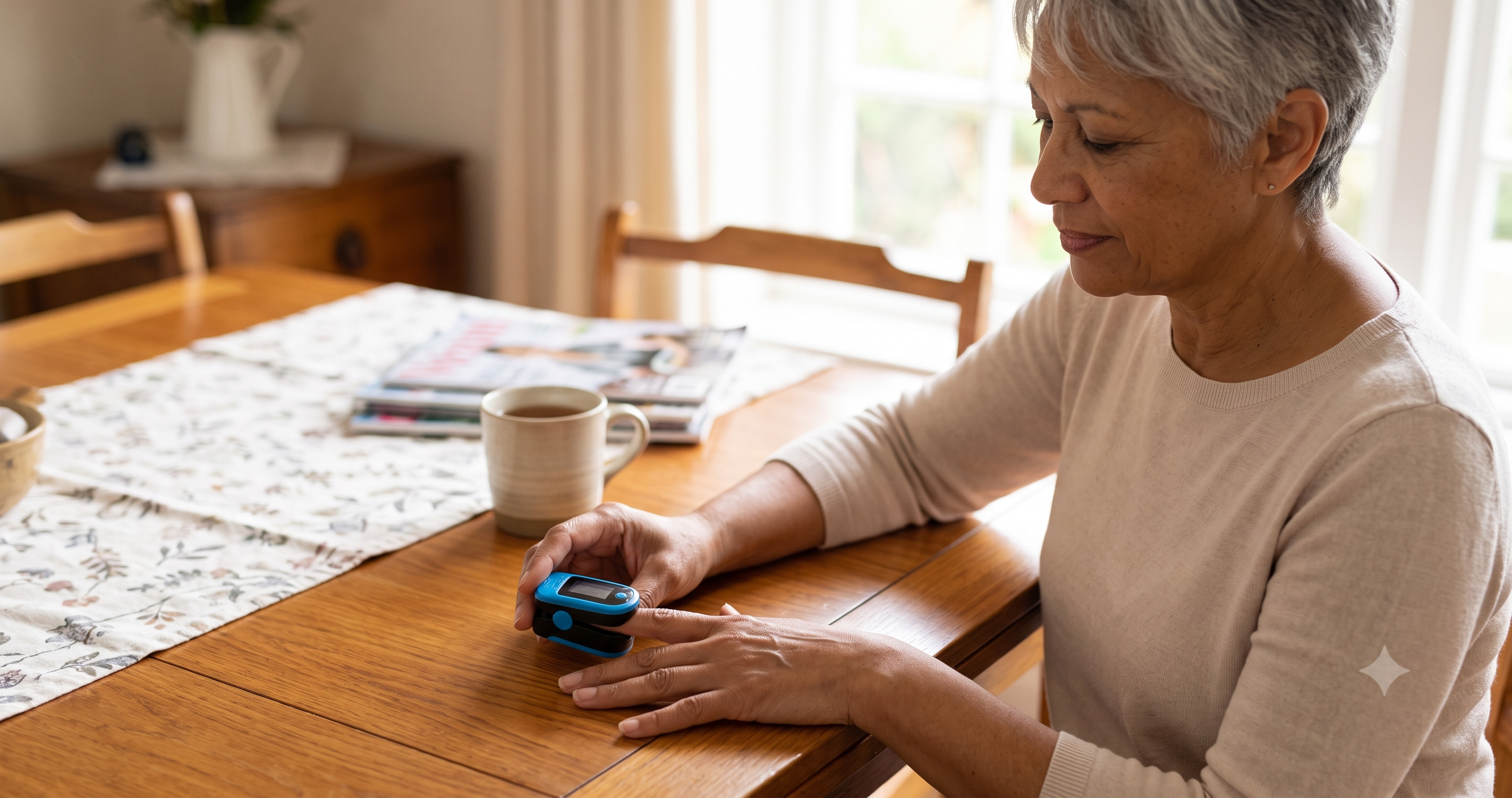
A pulse oximeter gives you an answer in seconds. The harder part is knowing what that answer actually means. Is 97% a healthy reading? Should 93% be a concern? And when is it time to call your healthcare provider?
Understanding those numbers doesn't have to be complicated. This guide explains what a pulse oximeter measures, who benefits from using one at home, and how to interpret your readings with confidence.
What does a pulse oximeter actually measure?
A pulse oximeter provides two important readings in just a few seconds:
-
SpO₂ (oxygen saturation): The percentage of haemoglobin in your blood that is carrying oxygen. This is the primary number most people are checking.
-
Pulse rate: Your heart rate, measured in beats per minute using the same sensor.
The device works by passing two wavelengths of light through your fingertip and measuring how much light is absorbed by oxygen-rich and oxygen-poor blood. It's completely non-invasive, painless, and usually produces a stable reading within 15 to 30 seconds.
What is a normal reading?
For most healthy adults, these SpO₂ ranges are generally used as a guide:
-
95% to 100%: Normal. No action is usually needed.
-
92% to 94%: Below normal. Monitor your readings closely and contact your healthcare provider if the level persists or continues to fall.
-
Below 92%: Seek medical attention. Do not wait to see if the reading improves on its own.
It's important to remember that not everyone has the same baseline oxygen level. People living with chronic lung conditions, such as COPD, may normally have lower SpO₂ readings. Your healthcare provider can explain what range is appropriate for your individual condition.
Who benefits from monitoring at home?
Not long ago, checking oxygen saturation usually meant visiting a clinic or hospital. Today, a pulse oximeter makes it possible to monitor those readings from the comfort of home, giving individuals and caregivers greater confidence between medical appointments.
Home monitoring may be particularly helpful for:
-
People living with chronic respiratory conditions such as asthma, COPD, or pulmonary fibrosis.
-
Individuals recovering from illnesses like COVID-19, pneumonia, or bronchitis.
-
People with certain cardiovascular conditions where oxygen delivery may be affected.
-
Patients recovering after chest, abdominal, or cardiac surgery.
-
Family caregivers supporting an older adult or loved one with an existing respiratory or heart condition.
Regular monitoring doesn't replace professional medical care, but it can provide valuable information that helps you recognise changes sooner.
How to get an accurate reading — common mistakes
Getting an accurate reading is usually straightforward, but a few common mistakes can affect the result. The good news is that most of them are easy to correct.
-
Warm your hands first. Cold fingers can reduce blood flow and affect the reading.
-
Remove dark nail polish or avoid artificial nails if possible, as they may interfere with the sensor. If needed, try another finger.
-
Keep your hand still while the device measures your oxygen level. Even small movements can cause the numbers to fluctuate.
-
Check that the device fits properly. It should sit securely on your fingertip without feeling too tight.
-
Wait 15–30 seconds for the reading to stabilise before recording the result.
Understanding the Jumper JPD-500E
The Jumper JPD-500E is a clinically validated fingertip pulse oximeter designed for quick and convenient home monitoring. Its clear digital display shows both SpO₂ and pulse rate at the same time, making readings easy to understand.
Lightweight, battery-operated, and simple to use, it's suitable for everyday home monitoring as well as clinical spot checks.
Jumper JPD-500E pulse oximeter
You can also explore the complete Professional Diagnostics collection:
https://onlinemedicalsupply.com/pages/professional-diagnostics
When to act on a low reading
An unexpected low reading doesn't always mean something is seriously wrong. Before becoming concerned, repeat the test using the correct technique and take two or three readings.
If your SpO₂ remains below 92%, or you experience symptoms such as shortness of breath, chest pain, confusion, or blue-tinged lips, seek medical attention immediately.
For any reading below 95% that persists across multiple readings, contact your healthcare provider the same day.
Browse pulse oximeters and diagnostic equipment at Online Medical Supply.
Frequently asked questions
Can a pulse oximeter replace a visit to the doctor?
No. A pulse oximeter is a monitoring tool, not a diagnostic device. It helps track oxygen levels but cannot replace a professional medical evaluation.
Disclaimer: This article is for general educational purposes only and does not constitute medical advice. Pulse oximetry readings should be interpreted in the context of your individual health history and by a qualified healthcare provider. If you are experiencing difficulty breathing, chest pain, or any symptoms of concern, seek emergency medical care immediately.
Published by the Online Medical Supply Team | onlinemedicalsupply.com