
A routine blood test comes back, and your doctor tells you that your iron levels are low. You leave the appointment with a recommendation for ferrous sulfate 325mg and perhaps a few unanswered questions.
What exactly is ferrous sulfate? Why was this supplement recommended? How long will it take to work? And what should you expect once you start taking it?
If you're looking for straightforward answers, you're not alone. This guide explains ferrous sulfate 325mg in plain English, including who typically takes it, how it works, common side effects, and practical tips that can help make treatment easier and more effective.
What is iron deficiency and why does it matter?
Iron plays a critical role in helping the body produce haemoglobin, the protein inside red blood cells that carries oxygen throughout the body. When iron levels become too low, the body struggles to make enough healthy red blood cells.
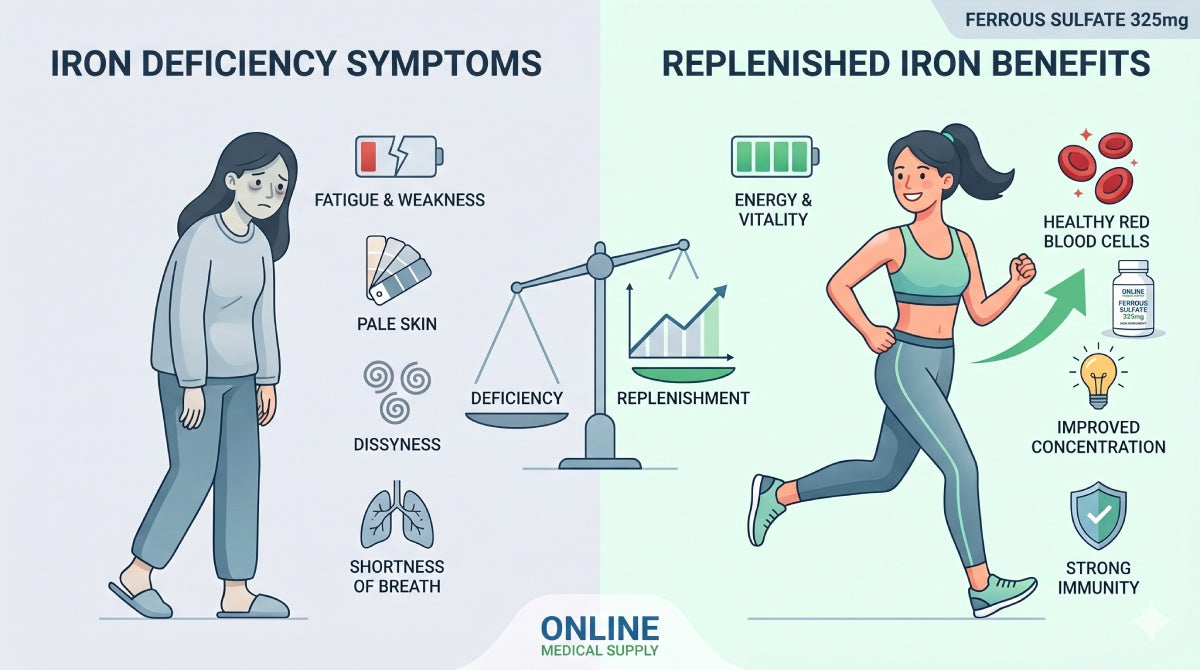
This can lead to iron deficiency anaemia, causing fatigue, weakness, shortness of breath, pale skin, dizziness, and difficulty concentrating. Fortunately, it is one of the most common nutritional deficiencies and usually responds well to treatment when managed consistently.
What is ferrous sulfate 325mg?

Ferrous sulfate is one of the most commonly recommended forms of iron supplementation. Physicians and pharmacists frequently choose it because it is effective, widely available, and generally affordable.
One point that often causes confusion is the "325mg" listed on the label. That number refers to the weight of the entire compound, not the amount of iron itself. In practice, a ferrous sulfate 325mg tablet provides approximately 65mg of elemental iron — the portion the body can actually absorb and use.
Ferrous sulfate is available both by prescription and over the counter. For many patients, it serves as a first-line option for correcting iron deficiency.
The ferrous sulfate 325mg tablets at Online Medical Supply compare directly to Feosol, offering the same active formulation in bottles of 100 tablets at an accessible value.
Who is typically recommended ferrous sulfate?
Ferrous sulfate may be recommended for a variety of patients, but the decision should always be based on proper medical evaluation and blood testing.
It is commonly used for:
• Patients diagnosed with iron deficiency anaemia after laboratory testing confirms low ferritin or haemoglobin levels
• Older adults whose iron intake or absorption may have decreased over time
• Individuals recovering from surgery or significant blood loss
• Women experiencing heavy menstrual bleeding or increased iron needs during pregnancy under obstetric supervision
• Patients with certain digestive or inflammatory conditions that interfere with nutrient absorption
Note: iron supplements should not be started without a confirmed deficiency. Excess iron can be harmful. Always confirm with your doctor or pharmacist first.
Practical tips for taking iron supplements
Many people are surprised to learn that taking iron successfully is about more than simply swallowing a tablet each day. A few practical habits can improve absorption and make the experience more comfortable.
• Take iron on an empty stomach if tolerated; otherwise take it with a small amount of food.
• Vitamin C may improve absorption.
• Dairy products, calcium supplements, antacids, and some medications can reduce absorption if taken too close together.
• Be consistent — iron stores take time to rebuild.
• Keep supplements out of reach of children.
Common side effects — what to expect
Like many medications and supplements, ferrous sulfate can cause side effects. Fortunately, most are mild and manageable.
• Dark or greenish-black stools (normal and harmless)
• Constipation (often improved with fluids and fibre)
• Nausea or mild stomach discomfort (often improves with time or food)
If symptoms are severe or persistent, contact your healthcare provider.
Do not stop taking your supplement without professional guidance.
Browse our full range of iron supplements and OTC health products at Online Medical Supply.
Frequently asked questions
How long does it take for ferrous sulfate to work?
Blood iron levels typically begin to shift within 1–2 weeks, but it usually takes 1–3 months to fully restore iron stores. Your doctor will advise on when to retest.
Can I take ferrous sulfate without a doctor's advice?
Ferrous sulfate is available over the counter, but supplementing without a confirmed deficiency is not recommended — excess iron can cause harm. Always check with your doctor or pharmacist first.
What is the difference between ferrous sulfate and Feosol?
Feosol is a branded iron supplement. Ferrous sulfate 325mg contains the same active compound at the same dose — it is the generic equivalent, typically available at a lower price.
Is ferrous sulfate safe for elderly patients?
Yes, under physician supervision. Elderly patients may need adjusted guidance on timing and interactions with other medications — a pharmacist review is always a good idea.
Disclaimer: This article is for general educational and informational purposes only. It does not constitute medical advice and should not be used to self-diagnose or begin iron supplementation without consulting a qualified healthcare provider. Iron supplementation should be started based on confirmed blood test results and medical guidance. Keep all iron supplements out of reach of children. If you experience severe or persistent side effects, contact your doctor or pharmacist.
Published by the Online Medical Supply Team | onlinemedicalsupply.com