
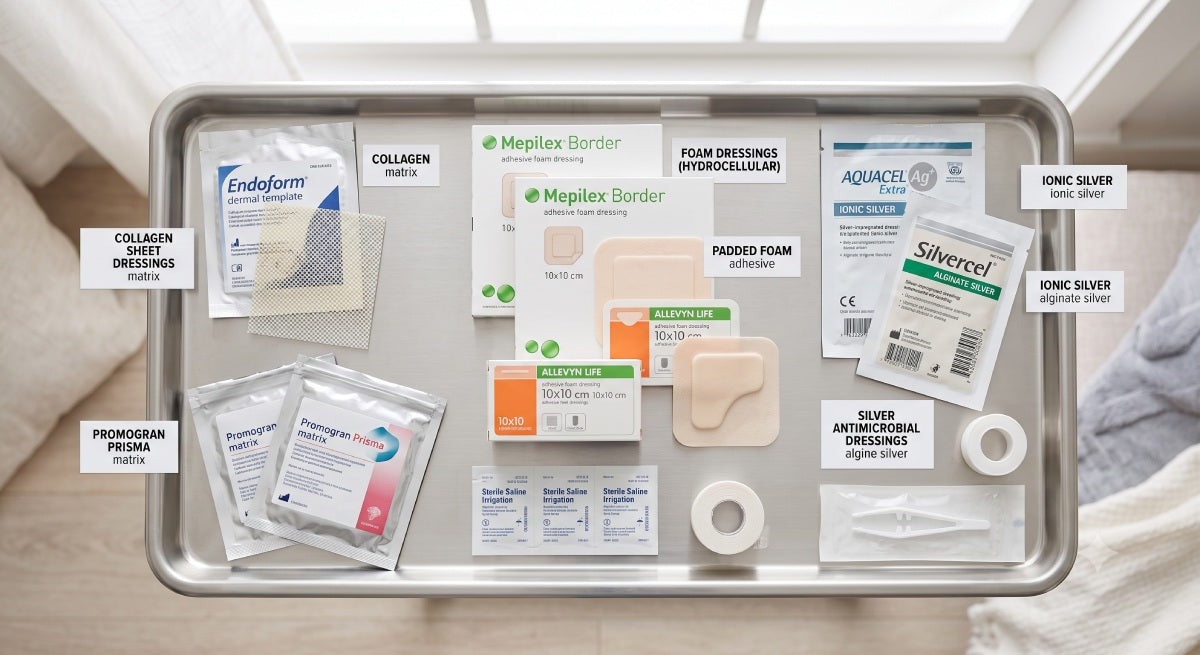
When a wound isn't healing as expected, a simple gauze pad may no longer be the whole story. That's where advanced wound dressings come in, with different materials designed to support specific aspects of wound care.
When standard gauze isn't enough
Standard gauze is absorbent and versatile, making it useful for many minor wounds. But it does not actively support healing, provide antimicrobial properties, or always prevent sticking to the wound bed. For wounds requiring more specialised care, advanced dressings are designed to address needs such as moisture management, tissue support, or bacterial control.
Collagen wound dressings
Collagen dressings support the body's natural wound healing process by providing a collagen scaffold that can support new tissue formation. They are used in various chronic and slow-healing wounds, including pressure injuries, diabetic foot ulcers, venous leg ulcers, and surgical wounds.
Some products combine collagen with ionic silver to provide both collagen support and antimicrobial action. Puracol Plus AG+ is one example.
👉 Puracol Plus AG+ Collagen Wound Dressings with Silver
Foam wound dressings
Foam dressings are designed to absorb moderate to heavy wound exudate while helping maintain a moist wound environment. They can also provide cushioning and are often designed for easier, gentler dressing changes.
Mepilex Border Lite is a thin, self-adherent foam dressing designed for wounds requiring gentle handling and absorption.
👉 Mepilex Border Lite foam dressing
Silver/antimicrobial dressings
Silver dressings use ionic silver for antimicrobial activity within the wound environment. They may be incorporated into wound care plans when bacterial control is a concern. However, they are not a replacement for systemic antibiotics when those are clinically indicated.
How to choose the right advanced dressing
The right dressing depends on factors such as wound type, drainage, tissue condition, infection status, and stage of healing. A wound care nurse, physician, or other qualified healthcare provider should determine which dressing is appropriate.
This guide is intended to help you understand the main categories, not to replace professional wound care guidance.
👉 Browse specialty wound care dressings
Disclaimer: This article is for general educational purposes only. Advanced wound dressings must be selected and used under the guidance of a qualified healthcare provider or wound care specialist. Do not change your wound care dressing type without medical advice.
Published by the Medical Supply Team | onlinemedicalsupply.com